
Slope Triangle: What It Is, How It Works, and Why It Matters

A slope triangle (also called a rise-over-run triangle) is a right triangle drawn along a line on a graph to visually represent how steep that line is. It breaks slope into two easy-to-understand parts: the vertical change (rise) and the horizontal change (run). By connecting these two measurements, you form a right triangle — and […]
Annealing Temperature Calculator

On This Page Annealing Temperature Calculator What Is Annealing Temperature? The Formula Explained How to Calculate Annealing Temperature (Step-by-Step) Worked Example How to Find Primer Tm: Wallace Rule vs Nearest-Neighbor How to Optimize Annealing Temperature Annealing Temperature vs Melting Temperature Frequently Asked Questions What Is Annealing Temperature? In a PCR thermal cycle, the annealing temperature (Tₐ) is […]
Slope of Parallel Line
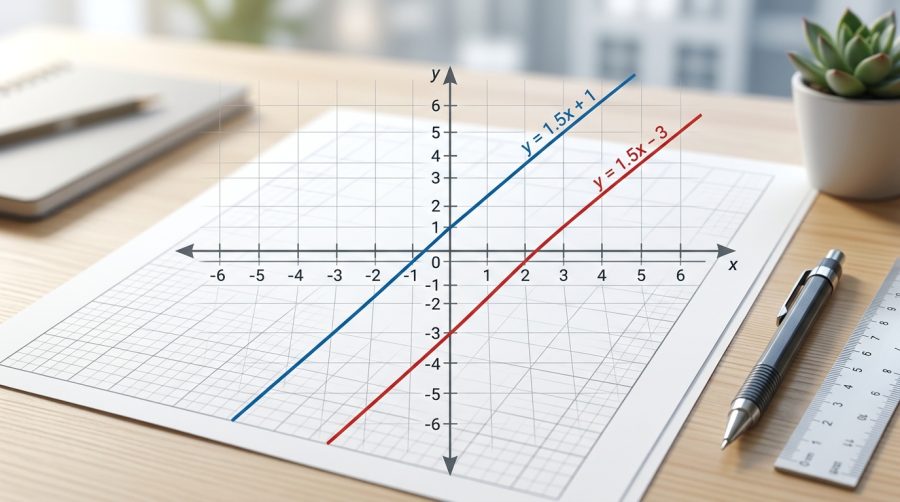
The slope of a parallel line refers to the measure of how steep a line is, typically represented as the ratio of the vertical change (rise) to the horizontal change (run) between two points on the line. When two lines are parallel, they have the same slope. This concept plays a crucial role in geometry […]
Define Positive Slope

Understand the concept of positive slope and how to calculate it with real-life examples. What is Positive Slope? A positive slope is a key concept in mathematics, particularly in the study of lines on a graph. It refers to the steepness and direction of a line when plotted on a Cartesian plane. In simple terms, […]
Perpendicular Slope

Understanding the Relationship Between Perpendicular Lines and Slope What is Perpendicular Slope? In geometry, the term perpendicular slope refers to the slope of a line that is perpendicular to another. When two lines are perpendicular, they intersect at a 90-degree angle. The slope of a line is defined as the ratio of the vertical change […]
Can a Slope Be Zero?

Understanding Zero Slope and Its Implications in Geometry and Calculations What is “Can a Slope Be Zero”? In geometry, the slope of a line represents its steepness or incline. It is calculated as the change in the vertical direction (y) divided by the change in the horizontal direction (x) between two points on the line. […]
Can Slope Be Negative?

Understanding Negative Slopes and Their Real-Life Applications When studying mathematics, particularly in the realm of algebra and geometry, one of the most fundamental concepts is the slope. But what happens when the slope is negative? Can slope be negative? This question often arises for students, engineers, and anyone working with graphs, as slopes play a […]
What is Slope Practice?

Slope practice refers to the process of calculating the slope of a line or surface, commonly used in various fields such as mathematics, engineering, and construction. The slope represents the steepness or incline of a surface, often expressed as a ratio or percentage. It is a fundamental concept for anyone working with gradients, inclines, or […]
What is a Finding Slope Worksheet?

A Finding Slope Worksheet is a valuable tool for students and professionals alike to practice and improve their understanding of calculating slope. Whether you’re working on algebra homework, preparing for a math test, or applying slope calculations in real-life scenarios, these worksheets provide a structured approach to mastering the concept. The slope of a line […]
Types of Slopes

Slope refers to the steepness or incline of a surface, and it is a fundamental concept in geometry, construction, engineering, and even landscaping. Different types of slopes exist depending on their direction, degree of steepness, and usage. Understanding these types helps in making critical decisions in areas such as architecture, road design, and drainage systems. […]