What is My Body Shape? Understanding the Body Shape Calculator
Are you wondering “what is my body shape” – is it an hourglass, pear, apple, or rectangle? Our comprehensive body shape calculator provides an accurate, science-based answer in seconds. This powerful female body shape tool eliminates the guesswork of analyzing your reflection in the mirror by using precise measurements to classify your body type into one of seven popular categories.
Instead of uncertainty about whether you’re a triangle or inverted triangle, this body type calculator uses your actual measurements – bust, waist, and hip dimensions – to determine your body shape with mathematical precision. Whether you’re seeking fashion guidance, fitness goals, or simply curious about your body proportions, this body measurements calculator delivers clear, actionable results.
Understanding how to know my body shape is more than vanity – it’s about making informed decisions for clothing that flatters your figure, setting realistic fitness goals, and appreciating your unique body proportions. Our shape determination calculator combines measurement science with practical styling advice to help you look and feel your best.
How to Take Measurements for the Body Type Analyzer
Accurate measurements are essential for the body shape calculator to determine your body type correctly. This body measurement guide explains exactly how to measure bust waist and hips correctly for optimal results.
Required Measurements for Body Shape Calculation
Our body proportions calculator requires four key measurements:
1. Bust Measurement
Measure around the fullest point of your bust using a soft, flexible measuring tape. The bust waist hip calculator needs this measurement taken while standing straight with your arms relaxed at your sides.
Proper Technique:
- Wear an unpadded bra or no bra
- Wrap the tape around the fullest part of your chest
- Keep the tape parallel to the floor
- Breathe normally – don’t hold your breath
- The tape should be snug but not tight
- Record measurement to the nearest half-inch or centimeter
2. Waist Measurement
Your waist is the narrowest part of your torso, typically located above your belly button and below your rib cage. This waist hip ratio calculator measurement is critical for determining body shape classification.
Proper Technique:
- Stand naturally without pulling your stomach in
- Locate the narrowest point of your torso
- Wrap tape measure around your natural waistline
- The tape should sit comfortably without digging into skin
- Breathe normally and measure after exhaling
- Don’t overtighten the measuring tape
3. Hip Measurement
The hip measurement represents the widest point below your waist. This body size chart calculator value helps determine whether you have pear, hourglass, or rectangle proportions.
Proper Technique:
- Remove clothing for accuracy (or wear thin, fitted clothes)
- Stand with feet together
- Measure around the fullest part of your buttocks
- Keep tape measure parallel to floor
- Ensure tape isn’t twisted in back
- Record the widest measurement
4. High Hip Measurement
This often-overlooked measurement captures the upper hip curve over your pelvic bone. The body form calculator uses this to distinguish between spoon and pear body shapes.
Proper Technique:
- Locate the top of your hip bone (pelvic crest)
- Measure around the upper hip curve
- This is NOT the widest point of hips
- Position is typically 3-4 inches below natural waist
- Keep tape level all the way around
Measurement Tips for Accurate Results
For the most precise body shape test using tape measure results:
- Use a flexible measuring tape: Cloth or vinyl measuring tapes work best for body measurements
- Measure in morning: Body measurements can fluctuate throughout the day
- Stand in front of a mirror: Ensures tape is level and properly positioned
- Get assistance: Having someone help ensures accurate back measurements
- Record immediately: Write down measurements before you forget
- Measure twice: Verify each measurement for consistency
- Use consistent units: Our body shape estimator works with both imperial (inches) and metric (centimeters) units
The body measurement guide principle: accuracy matters more than speed. Taking an extra minute to measure correctly ensures your body type analyzer results are reliable.
Different Types of Body Shapes Explained
Understanding the different types of body shapes explained helps you interpret your women body shape test results. Our shape identifier tool classifies bodies into seven distinct categories based on body measurements comparison and proportion analysis.
1. Hourglass Body Shape
The classic hourglass body shape represents balanced, harmonious proportions. This figure type calculator category features:
Characteristics:
- Bust and hip measurements are nearly equal (within 5% difference)
- Waist is significantly smaller than bust and hips (at least 25% smaller)
- Well-defined waist creates dramatic curves
- Weight distributes proportionally between upper and lower body
- Shoulder width matches hip width
Percentage of Women: Approximately 8% of women have true hourglass figures
Celebrity Examples: Marilyn Monroe, Scarlett Johansson, Sofia Vergara
Fashion Tips: Emphasize your defined waist with belted styles, wrap dresses, and fitted silhouettes that showcase your balanced proportions.
2. Top Hourglass Body Shape
Similar to the classic hourglass but with slightly larger bust proportions:
Characteristics:
- Bust measurement exceeds hips by 1-2 inches
- Clearly defined waist (at least 25% smaller than bust)
- Balanced overall appearance
- Fuller bust creates slight top-heavy silhouette
Fashion Tips: V-neck tops balance fuller bust, A-line skirts create harmony, structured blazers define waist.
3. Bottom Hourglass Body Shape
An hourglass variation with emphasis on the lower body:
Characteristics:
- Hip measurement exceeds bust by 1-2 inches
- Well-defined waist (at least 25% smaller than hips)
- Curvier lower body proportions
- Shoulders slightly narrower than hips
Fashion Tips: Detailed tops and statement necklaces draw eyes upward, dark-colored bottoms create balance, bootcut jeans flatter lower curves.
4. Pear / Triangle Body Shape
The pear / triangle body shape is one of the most common body types, representing approximately 20% of women.
Characteristics:
- Hips significantly wider than bust (difference of 5% or more)
- Slim, narrow shoulders
- Small to medium bust
- Defined or moderately defined waist
- Weight concentrates in hips, thighs, and buttocks
- Upper body appears proportionally smaller
Why It’s Called Triangle: When viewed from front, the body creates a triangle shape with narrow top and wide base.
Fashion Tips: Bright colors and patterns on top, darker bottoms, boat neck tops, structured jackets with shoulder details, A-line skirts.
5. Spoon Body Shape
The spoon shape resembles the pear but with more dramatic proportions:
Characteristics:
- Hips much larger than bust (10% or more difference)
- Hips have distinctive “shelf-like” appearance
- High hips are noticeably larger than bust
- Well-defined waist
- Weight concentrates heavily in lower body
- Thighs may touch throughout their length
Percentage of Women: Approximately 20% (often grouped with pear shapes)
Fashion Tips: Emphasize upper body with ruffles and details, wrap tops that cinch waist, bootcut or flared pants balance hips.
6. Apple / Round Body Shape
The apple / round body shape carries weight primarily in the midsection:
Characteristics:
- Bust and waist measurements are similar
- Waist is less than 9 inches smaller than bust
- Fuller midsection and upper body
- Slimmer legs and hips relative to torso
- Shoulders may be broad
- Weight concentrates around abdomen
Health Consideration: Apple shapes should monitor waist-to-hip ratio (WHR) for health indicators.
Fashion Tips: Empire waist dresses, V-necks elongate torso, darker colors through midsection, A-line silhouettes skim the stomach.
7. Rectangle / Straight Body Shape
The rectangle / straight body shape is the most common body type, representing 46% of women.
Characteristics:
- Bust, waist, and hip measurements within 5% of each other
- Waist less than 9 inches smaller than bust or hips
- Minimal curves or definition
- Athletic, straight-up-and-down appearance
- Weight distributes evenly throughout body
- Often described as “boyish” figure (unfairly)
Fashion Tips: Create curves with peplum tops, belts at natural waist, ruffled or embellished details, layering techniques.
8. Inverted Triangle Body Shape
The inverted triangle body shape features broader shoulders and narrower hips:
Characteristics:
- Bust/shoulder measurement exceeds hips by 5% or more
- Broad shoulders relative to body
- Fuller bust or broad chest
- Narrow hips and slim legs
- Waist not prominently defined
- Athletic or swimmer’s build
Percentage of Women: Approximately 14%
Fashion Tips: Wide-leg pants add volume to lower body, V-necks narrow shoulders, darker colors on top, statement skirts draw attention downward.
9. Diamond Body Shape
A less common classification with unique proportions:
Characteristics:
- Wider waist relative to bust and hips
- Narrower shoulders and hips
- Weight concentrates around midsection
- Slimmer upper and lower body
- Fuller middle section
Fashion Tips: Flowing fabrics through midsection, detailed necklines, defined legs with fitted pants, layered tops.
How to Calculate Body Shape Using Measurements
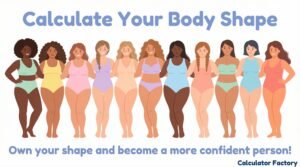
Understanding how to calculate body shape using measurements involves numerical ratio classification and threshold-based shape identification. Our silhouette calculator uses mathematical formulas to determine which category you fall into.
Body Shape Calculation Formula
The body proportions calculator employs several key ratios:
1. Bust-to-Waist Ratio
Bust-to-Waist Ratio = Bust Measurement ÷ Waist MeasurementThis bust-to-waist ratio helps determine if you have an hourglass, apple, or rectangle shape. Ratios above 1.35 typically indicate hourglass proportions.
2. Waist-to-Hip Ratio (WHR)
Waist-to-Hip Ratio = Waist Measurement ÷ Hip MeasurementThe waist-to-hip ratio (WHR) is both a body shape indicator and health metric:
- WHR below 0.75: Strong hourglass or pear shape
- WHR 0.75-0.85: Moderate curves (hourglass, bottom hourglass, or athletic)
- WHR above 0.85: Rectangle, apple, or inverted triangle shape
3. Hip-to-Bust Ratio
Hip-to-Bust Ratio = Hip Measurement ÷ Bust MeasurementThis ratio determines top-heavy vs. bottom-heavy proportions:
- Ratio above 1.05: Pear or spoon shape (bottom-heavy)
- Ratio 0.95-1.05: Hourglass or rectangle shape (balanced)
- Ratio below 0.95: Inverted triangle shape (top-heavy)
Measurement-to-Category Mapping
The body type calculator uses measurement-to-category mapping through decision trees:
Step 1: Analyze Bust vs. Hip Difference
Calculate the percentage difference:
Difference = |Bust - Hip| ÷ ((Bust + Hip) ÷ 2) × 100%- Less than 5% difference: Proceed to waist analysis (potential hourglass or rectangle)
- Bust larger by 5%+: Potential inverted triangle
- Hips larger by 5%+: Potential pear or spoon
Step 2: Evaluate Waist Definition
Calculate waist reduction:
Waist Definition = (Larger of Bust/Hip - Waist) ÷ Larger of Bust/Hip × 100%- 25%+ reduction: Strong waist definition (hourglass shapes)
- 10-25% reduction: Moderate definition (athletic, diamond)
- Less than 10%: Minimal definition (rectangle, apple)
Step 3: Apply Classification Rules
The shape determination calculator combines these measurements using standardized measurement ranges to assign your body shape category.
Unit Conversions for Body Measurements
The body measurements calculator handles both measurement systems through unit conversions (cm ↔ inches):
Imperial to Metric:
Centimeters = Inches × 2.54Metric to Imperial:
Inches = Centimeters ÷ 2.54Example: 34-inch bust = 34 × 2.54 = 86.36 cm
Body Shape Calculator Female Online: How to Use the Tool
Using our body shape calculator female online tool is straightforward. This body shape finder requires just four measurements and provides instant results.
Step-by-Step Body Type Calculator Usage
Step 1: Gather Your Measurements
Before using the calculate body shape from measurements tool:
- Take all four measurements using the techniques described above
- Record measurements in either inches or centimeters
- Ensure accuracy by measuring twice
- Have measurements written down before starting
Step 2: Input Your Measurements
Enter your data into the body figure calculator:
- Bust measurement: Enter fullest chest circumference
- Waist measurement: Enter narrowest torso point
- Hip measurement: Enter widest point below waist
- High hip measurement: Enter upper hip curve measurement
Step 3: Select Measurement Units
Choose your preferred unit system:
- Imperial (inches) for US users
- Metric (centimeters) for international users
- The calculator performs automatic conversions
Step 4: Review Your Results
The female body shape tool displays:
- Your primary body shape classification
- Percentage match to each body type category
- Key body ratios (WHR, bust-to-waist, hip-to-bust)
- Personalized fashion recommendations
- Health indicators based on waist measurements
Understanding Your Body Shape Calculator Results
The body type analyzer provides comprehensive insights:
Primary Classification: Your main body shape category (e.g., “Hourglass,” “Pear,” “Rectangle”)
Percentage Scores: Shows how closely you match each body type. Many women have characteristics of multiple shapes, so seeing percentages helps understand your unique proportions.
Key Ratios:
- Waist-to-Hip Ratio: Health indicator and shape determinant
- Bust-to-Waist Ratio: Defines upper body proportions
- Overall Balance Score: Measures symmetry between upper and lower body
Personalized Recommendations: Fashion styles, clothing cuts, and styling tips specifically for your body shape.
Why Body Shape Matters in Fashion
Understanding why body shape matters in fashion transforms how you shop and dress. The body shapes and clothing style tips connection helps you:
Fashion Benefits of Knowing Your Body Shape
1. Efficient Shopping
Knowing your body type eliminates trial-and-error shopping:
- Focus on styles proven to flatter your shape
- Avoid styles that typically don’t work for your proportions
- Save time in fitting rooms
- Reduce returns and unworn purchases
2. Confidence Boost
Wearing clothes designed for your body shape:
- Enhances your natural assets
- Creates balanced, proportional silhouette
- Makes you feel comfortable and confident
- Reduces body image concerns
3. Professional Styling
Fashion styling service for body shapes use the same principles:
- Personal stylists assess body proportions
- Recommendations align with your measurements
- Creates cohesive wardrobe strategies
- Adapts trends to your specific shape
Body Shapes and Clothing Style Tips by Type
Hourglass Body Shape Fashion Tips:
- Best: Wrap dresses, belted styles, fitted blazers, pencil skirts
- Avoid: Shapeless sacks, oversized clothing, boxy cuts
- Goal: Emphasize defined waist and balanced proportions
- Shopping: Look for hourglass-friendly dresses with defined waistlines
Pear/Triangle Body Shape Fashion Tips:
- Best: Boat necks, embellished tops, A-line skirts, dark bottom colors
- Avoid: Tight pants, horizontal stripes on bottom, skinny jeans
- Goal: Balance narrow shoulders with wider hips
- Shopping: Focus on clothing for pear body shape with detailed tops
Apple Body Shape Fashion Tips:
- Best: Empire waists, V-necks, A-line dresses, elongating cuts
- Avoid: Clingy fabrics at waist, horizontal stripes, belts at natural waist
- Goal: Create waist definition and elongate torso
Rectangle Body Shape Fashion Tips:
- Best: Peplum tops, belts, ruffles, layering, textured fabrics
- Avoid: Straight shifts, shapeless tunics, boxy jackets
- Goal: Create curves and definition
Inverted Triangle Body Shape Fashion Tips:
- Best: V-necks, wide-leg pants, A-line skirts, dark colors on top
- Avoid: Shoulder pads, boat necks, cap sleeves, embellished tops
- Goal: Balance broad shoulders with narrower hips
Health Implications: Waist-Hip Ratio Calculator
The waist hip ratio calculator serves both fashion and health purposes. Understanding your waist-to-hip ratio (WHR) provides important health insights beyond body shape classification.
What is a Healthy Waist-to-Hip Ratio?
Health organizations use WHR as an indicator of disease risk:
For Women:
- WHR below 0.80: Low health risk
- WHR 0.81-0.85: Moderate health risk
- WHR above 0.85: High health risk
For Men:
- WHR below 0.90: Low health risk
- WHR 0.91-0.95: Moderate health risk
- WHR above 0.95: High health risk
Health Risks Associated with High WHR:
- Increased cardiovascular disease risk
- Higher likelihood of type 2 diabetes
- Greater risk of certain cancers
- Elevated blood pressure concerns
- Metabolic syndrome indicators
What is a Healthy Waist Size?
Beyond ratios, absolute waist measurement matters for health:
For Women:
- Below 31.5 inches (80 cm): Generally healthy range
- 31.5-35 inches (80-88 cm): Increased risk; consider weight management
- Above 35 inches (88 cm): High risk; medical consultation recommended
For Men:
- Below 37 inches (94 cm): Generally healthy range
- 37-40 inches (94-102 cm): Increased risk; consider weight management
- Above 40 inches (102 cm): High risk; medical consultation recommended
The World Health Organization emphasizes that waist circumference is a critical indicator independent of BMI. Two people with the same BMI can have vastly different health risks based on where they carry their weight.
How to Check My Body Shape at Home
Learning how to check my body shape at home requires minimal equipment and just a few minutes. This best way to determine body shape method ensures accurate self-assessment.
Required Tools for Home Body Shape Assessment
Essential:
- Flexible cloth measuring tape (sewing tape works perfectly)
- Full-length mirror
- Notepad and pen for recording measurements
- Well-lit room for visibility
Optional but Helpful:
- Camera or smartphone for photo documentation
- Helper to assist with measurements
- Body measurement chart for tracking over time
DIY Body Shape Test Using Tape Measure
Follow this comprehensive body shape test using tape measure protocol:
1. Prepare Your Environment
- Wear minimal, form-fitting clothing or undergarments
- Stand on hard flooring (not carpet) for stability
- Position mirror where you can see front and side views
- Ensure privacy and comfortable temperature
2. Take Each Measurement Systematically
- Start with bust, then waist, hips, and finally high hip
- Measure each location twice for accuracy
- If measurements differ, take a third measurement
- Record immediately to prevent forgetting
3. Calculate Your Ratios
Using your measurements, calculate:
Waist-to-Hip Ratio:
WHR = Waist ÷ HipBust-to-Waist Ratio:
BWR = Bust ÷ WaistHip-to-Bust Ratio:
HBR = Hip ÷ Bust4. Compare to Body Shape Standards
Use these guidelines for body type calculator for clothing fit assessment:
Hourglass Indicators:
- Bust and hip within 1-2 inches of each other
- Waist at least 9 inches smaller than bust/hips
- WHR below 0.75
Pear Indicators:
- Hips 2+ inches larger than bust
- Defined waist
- WHR below 0.80
Apple Indicators:
- Waist less than 9 inches smaller than bust
- Weight carried in midsection
- WHR above 0.85
Rectangle Indicators:
- Bust, waist, hips within 5% of each other
- Minimal waist definition
- WHR around 0.80-0.85
Inverted Triangle Indicators:
- Bust/shoulders 2+ inches larger than hips
- Broader upper body
- Narrower lower body
Does Your Body Shape Change When You Lose Weight?
One of the most common questions is whether your body shape change when you lose weight. The answer involves understanding the difference between apple and pear body shape fat distribution patterns.
How Weight Loss Affects Body Shape
Bone Structure Remains Constant: Your skeletal frame, shoulder width, and hip bone structure don’t change with weight loss. These foundational elements determine your basic body shape category.
Fat Distribution Patterns: Where you lose fat depends on your body type:
Pear/Triangle Shapes:
- Lose weight first from upper body (face, arms, bust)
- Lower body fat (hips, thighs, buttocks) reduces slower
- May become more pear-shaped initially as top slims faster
- Eventually achieves more balanced proportions with continued loss
Apple Shapes:
- Lose belly fat relatively quickly with proper approach
- Upper body and waist measurements decrease noticeably
- Can transition toward more rectangular proportions
- May reveal hourglass shape hidden by midsection weight
Hourglass Shapes:
- Lose weight proportionally from all areas
- Maintain curved silhouette throughout weight loss
- Waist definition persists or becomes more pronounced
- Shape becomes smaller version of original
Rectangle Shapes:
- Weight loss doesn’t typically create curves
- May appear more defined and athletic
- Muscle building more effective than fat loss for shape change
- Can develop athletic body shape with training
Can You Change Your Body Shape?
The honest answer to “can you change your body shape?” is: partially, but with limitations.
What You CAN Change:
1. Muscle Development
- Building specific muscle groups creates shape illusions
- Shoulder development makes waist appear smaller (inverted triangle effect)
- Glute and hamstring training enhances lower body curves
- Core strengthening improves posture and appearance
2. Fat Distribution (Somewhat)
- Overall fat loss changes size but maintains relative distribution
- Strategic fat loss can minimize problem areas
- Targeted exercise doesn’t spot-reduce fat (myth)
- Diet and cardio create overall slimming effect
3. Posture and Presentation
- Improved posture dramatically affects appearance
- Core strength creates more defined silhouette
- Confidence changes how others perceive your shape
What You CANNOT Change:
1. Skeletal Structure
- Hip bone width is genetically determined
- Shoulder width is fixed post-puberty
- Rib cage dimensions are permanent
- Height and bone density are unchangeable
2. Natural Fat Storage Patterns
- Genetic predisposition determines where fat accumulates
- Hormones dictate distribution (estrogen = hips/thighs; cortisol = belly)
- Spot reduction is scientifically impossible
- Overall pattern persists regardless of total body fat
How to Improve Body Proportions
While you can’t fundamentally change your body shape classification, you can learn how to improve body proportions through strategic approaches.
Fitness Strategies for Body Proportion Enhancement
For Pear Shapes:
- Upper body strength training: Build shoulders and back to balance hips
- Shoulder press, lateral raises, pull-ups: Create width up top
- Avoid excessive lower body hypertrophy: May increase disproportion
- Cardio focus: HIIT and cycling for lower body fat reduction
For Apple Shapes:
- Core strengthening: Planks, dead bugs, bird dogs for stability
- Full-body strength training: Builds muscle, increases metabolism
- Cardiovascular exercise: Particularly effective for reducing belly fat
- Stress management: Reduces cortisol-driven abdominal fat storage
For Rectangle Shapes:
- Glute and hip development: Squats, hip thrusts, deadlifts
- Oblique training: Side planks, Russian twists for waist definition
- Shoulder building: Creates illusion of smaller waist
- Posture work: Emphasizes natural curves
For Inverted Triangle Shapes:
- Lower body development: Lunges, squats, leg press for balance
- Minimize upper body bulk: Use lighter weights, higher reps
- Core stability: Creates defined midsection
- Hip abductor work: Adds width to lower body
Fashion Strategies for Body Proportion Improvement
Strategic Clothing Choices:
Creating Curves (Rectangle):
- Peplum tops and dresses
- Belted waists
- Ruffles and embellishments
- Textured fabrics
- Layering techniques
Balancing Proportions (Pear):
- Statement necklaces and earrings
- Detailed, embellished tops
- Boat necks and off-shoulder styles
- Dark-colored bottoms
- A-line silhouettes
Defining Waist (Apple):
- Empire waist dresses
- Wrap styles
- Vertical lines and patterns
- Structured jackets
- V-necklines
Harmonizing Upper/Lower (Inverted Triangle):
- Wide-leg pants
- A-line and full skirts
- Darker colors on top
- Minimal shoulder detailing
- V-necks and vertical details
Body Shape and Age: How Female Body Changes Over Time
Understanding does a woman’s body shape change with age helps set realistic expectations for your body type analyzer results at different life stages.
Life Stages and Body Shape Evolution
Puberty (Ages 10-18):
- Estrogen production triggers significant changes
- Pre-pubescent children have similar hip-to-waist ratios regardless of sex
- Female hips widen dramatically
- Breast development occurs
- Fat storage shifts to buttocks, thighs, and hips
- Final adult body shape emerges by late teens
Young Adulthood (Ages 18-30):
- Body shape relatively stable during this period
- Easiest time to maintain or change body composition
- Highest natural metabolism
- Most responsive to diet and exercise changes
- Ideal time for building healthy habits
Pregnancy and Postpartum:
- Temporary body shape changes during pregnancy
- Estrogen levels rise, causing breast enlargement
- Hips may widen slightly (permanently in some cases)
- Weight gain patterns vary by individual
- Most women return to pre-pregnancy shape with time
- Some permanent changes possible (wider hips, larger bust)
Perimenopause and Menopause (Ages 45-55+):
- Decreased estrogen levels cause significant redistribution
- Fat shifts from hips/thighs to waist/abdomen
- Pear shapes may become more apple-shaped
- Breast tissue decreases, breasts may shrink
- Muscle mass naturally decreases without intervention
- Metabolism slows, making weight management harder
- Hourglass figures may lose waist definition
Post-Menopause (Ages 55+):
- Further fat redistribution to midsection
- Continued muscle mass loss without strength training
- Bone density decreases (affects posture and height)
- Body composition changes more dramatic than weight changes
- Shape maintenance requires active effort
Hormonal Influences on Body Shape
Estrogen:
- Promotes fat storage in hips, thighs, buttocks
- Maintains breast tissue
- High during reproductive years
- Creates feminine curves
- Declines dramatically during menopause
Progesterone:
- Fluctuates during menstrual cycle
- Can cause temporary water retention and bloating
- Works with estrogen for reproductive functions
Cortisol (Stress Hormone):
- Promotes abdominal fat storage
- Elevated during chronic stress
- Can shift body shape toward apple type
- Managed through stress reduction techniques
Testosterone:
- Present in women at lower levels than men
- Helps maintain muscle mass
- Decreases with age
- Affects where fat is stored
Commercial Body Shape Resources and Tools
For those seeking advanced body shape calculator app functionality or professional guidance, numerous commercial options exist.
Body Shape Calculator Apps
Premium Features to Look For:
Mobile Body Type Analyzers:
- Photo-based shape analysis using AI
- Measurement tracking over time
- Integration with fitness apps
- Virtual wardrobe recommendations
- Shopping links for suggested styles
Popular Body Shape Apps:
- Style advisors with body type analysis
- Virtual fitting room technology
- Fashion recommendation engines
- Measurement storage and history
- Before/after photo comparisons
Typical Pricing:
- Free basic versions: Limited features
- Body shape calculator app premium: $5-15/month
- One-time purchase apps: $10-30
- Professional styling apps: $30-100/month
Body Shape Measurement Tool Buy Options
Physical Measurement Tools:
Body Proportion Measuring Tape:
- Retractable cloth measuring tapes: $5-15
- Digital measuring tapes with memory: $20-40
- Professional seamstress tapes: $10-25
- Smart measuring tapes with app connectivity: $40-80
Complete Measurement Kits:
- Tape measure, body fat caliper, guide book: $15-30
- Professional assessment packages: $50-100
- Smart scales with body composition: $50-200
Fashion Styling Service for Body Shapes
Professional Styling Options:
Personal Styling Subscription Body Type:
- Online styling services: $20-50/month
- Monthly clothing boxes based on shape: $50-150
- Virtual personal stylist consultations: $50-200/session
- In-person styling sessions: $100-500/session
Services Typically Include:
- Initial body shape assessment
- Personalized style recommendations
- Curated clothing selections
- Wardrobe audit and organization
- Ongoing fashion guidance
Plus-Size Styling Tips: Specialized services for plus-size body shapes:
- Body-positive styling approaches
- Extended size range expertise
- Specific plus-size brand knowledge
- Confidence-building consultation
Online Shopping by Body Type
Body Type Calculator for Clothing Fit:
Many retailers now offer:
- Body shape quizzes before shopping
- Filtered results by body type
- Size recommendations based on measurements
- Style guides for each shape category
- Customer reviews organized by body shape
Clothing for Specific Shapes:
- Clothing for pear body shape collections
- Hourglass-friendly dresses sections
- Apple shape styling departments
- Rectangle body athletic wear
- Inverted triangle balance pieces
Frequently Asked Questions About Body Shape
What is My Body Type?
Your body type refers to your overall body shape classification based on measurements and proportions. The body shape calculator determines this by analyzing your bust, waist, hip, and high hip measurements to classify you into one of seven main categories: hourglass, pear/triangle, apple, rectangle, inverted triangle, spoon, or diamond.
Beyond visual body shapes, what is my body type can also refer to somatotypes (ectomorph, mesomorph, endomorph), which describe metabolism and muscle-building tendencies rather than proportions.
What are the 3 Main Body Types (Somatotypes)?
The three main somatotypes are:
Ectomorph:
- Naturally thin and lean build
- Difficulty gaining weight or muscle
- Fast metabolism
- Long limbs and narrow frame
- Low body fat naturally
- Often called “hard gainers”
Mesomorph:
- Athletic, muscular build naturally
- Gains muscle easily
- Moderate metabolism
- Broad shoulders and defined muscles
- Responds well to training
- Balanced body composition
Endomorph:
- Rounder, softer body naturally
- Gains weight easily
- Slower metabolism
- Difficulty losing fat
- Larger bone structure
- Stores fat readily
Most people are combinations of these types rather than pure examples. Understanding your somatotype helps with fitness & body proportion tracking and setting realistic goals.
What are the 5 Female Body Types?
The five main female body types commonly referenced are:
- Rectangle: Bust, waist, and hips similar measurements; minimal curves
- Triangle/Pear: Hips wider than bust; defined waist; narrow shoulders
- Hourglass: Bust and hips nearly equal; significantly smaller waist
- Spoon: Similar to pear but with shelf-like hips and more defined waist
- Inverted Triangle: Shoulders/bust broader than hips; athletic build
Our body shape calculator expands this to seven types by including top hourglass, bottom hourglass, and diamond shapes for more precise classification.
What is the Meaning of 36-24-36 Figure?
The 36-24-36 figure represents classic hourglass proportions measured in inches:
- 36 inches: Bust measurement (fullest chest point)
- 24 inches: Waist measurement (narrowest torso point)
- 36 inches: Hip measurement (widest point below waist)
This bust waist hip calculator standard became famous in the 1950s as the “ideal” hourglass figure. In centimeters, it’s expressed as 90-60-90.
Reality Check: Only a small percentage of women naturally have these exact proportions. The 36-24-36 figure represents just one example of an hourglass shape, not a universal standard everyone should pursue.
What is the Most Common Body Shape?
The rectangle body shape is the most common, representing approximately 46% of women globally. This straight, athletic body type features:
- Similar bust, waist, and hip measurements
- Minimal curve definition
- Even weight distribution
- Proportioned, athletic appearance
Second most common is the pear/spoon shape at about 20%, followed by inverted triangle at 14%, with hourglass being relatively rare at only 8%.
What is a Zero Figure?
A zero figure refers to US women’s clothing size zero, which typically fits measurements ranging from:
- 30-22-32 inches (76-56-81 cm) to
- 36-28-36 inches (90-71.5-90 cm)
Depending on brand and style.
Historical Context: What was once a size 8 in 1958 became size 0 due to “vanity sizing” – the practice of labeling clothes with smaller numbers to make customers feel better about purchases.
Health Concern: The zero figure is often associated with unhealthy weight loss or eating disorders. If you’re concerned about being underweight, consult a healthcare professional. The body measurements calculator is for shape determination, not health diagnosis.
How to Know My Body Shape Without Measurements?
While the body shape calculator provides the most accurate results, you can get a general idea through visual assessment:
Mirror Test Method:
- Stand in form-fitting clothes or undergarments before a full-length mirror
- Observe your silhouette from the front
- Compare bust and hip width visually
- Note waist definition – is it clearly smaller?
- Assess where weight concentrates – upper body, lower body, or midsection?
Visual Clues:
- Balanced bust/hips with small waist → Hourglass
- Hips noticeably wider than bust → Pear/Triangle
- Weight carried in midsection → Apple
- Straight up and down → Rectangle
- Shoulders broader than hips → Inverted Triangle
However, for fashion and fitness purposes, actual measurements using the body measurements calculator provide much more accurate and useful results.
Difference Between Apple and Pear Body Shape
The difference between apple and pear body shape centers on where the body stores fat:
Apple Shape (Central Fat Distribution):
- Weight accumulates around midsection and upper body
- Waist measurement similar to bust
- Slimmer legs and hips
- Fuller stomach, waist, and bust
- Higher health risks due to visceral fat around organs
- WHR typically above 0.85
Pear Shape (Peripheral Fat Distribution):
- Weight accumulates in hips, thighs, and buttocks
- Narrow shoulders and smaller bust
- Well-defined waist
- Fuller lower body
- Lower health risks – subcutaneous fat safer than visceral
- WHR typically below 0.80
Health Implications: Apple shapes carry higher cardiovascular and metabolic disease risk, making waist management particularly important. Pear shapes have health advantages but may find lower body fat more resistant to reduction.
How Body Measurements Define Body Shape
How body measurements define body shape involves analyzing the relationships between your four key measurements. The body proportions calculator uses three primary comparisons:
1. Bust-to-Hip Comparison: Determines whether you’re top-heavy, bottom-heavy, or balanced:
- Bust and hips within 5% of each other = balanced (hourglass or rectangle)
- Bust 5%+ larger = top-heavy (inverted triangle)
- Hips 5%+ larger = bottom-heavy (pear, spoon)
2. Waist Definition: Measures how much smaller your waist is compared to bust and hips:
- 25%+ smaller = strong definition (hourglass variations)
- 10-25% smaller = moderate definition (most shapes)
- Less than 10% = minimal definition (rectangle, apple)
3. High Hip Position: Distinguishes between pear and spoon shapes:
- High hip much larger than bust = spoon shape
- High hip moderately larger = pear shape
These numerical ratio classifications create precise body type determinations that visual assessment alone cannot provide.
Conclusion: Embracing Your Unique Body Shape
Understanding your body shape through our body shape calculator is more than a fashion exercise – it’s about appreciating your unique proportions and making informed choices that celebrate your natural figure. Whether you discover you’re an hourglass, pear, apple, rectangle, or inverted triangle, each shape has its own beauty and advantages.
The female body shape tool serves multiple purposes:
Fashion Empowerment: Knowing body shapes and clothing style tips transforms shopping from frustrating trial-and-error into strategic, confident decision-making. The right styles enhance your natural assets while creating balanced, proportional silhouettes.
Health Awareness: The waist hip ratio calculator component provides valuable health insights. Monitoring your waist-to-hip ratio (WHR) helps you understand cardiovascular risks and make informed lifestyle choices beyond appearance concerns.
Fitness Goals: Understanding how body measurements define body shape helps set realistic fitness expectations. Your bone structure determines your basic category, but strategic exercise can optimize your proportions within that framework.
Body Positivity: The body type analyzer reveals that only 8% of women have hourglass figures, yet society often presents this as the “ideal.” Recognizing that 46% have rectangle shapes, 20% are pears, and 14% are inverted triangles helps normalize body diversity.
Remember these key principles:
- Your body shape is neutral – no shape is inherently better or worse
- Measurements change over time – puberty, pregnancy, menopause all affect shape
- You can optimize within your category – muscle building and fat loss refine proportions
- Bone structure is permanent – embrace what you can’t change
- Clothing should adapt to you – not the other way around
Use the body measurements calculator as a tool for self-knowledge and empowerment, not self-criticism. Your body does incredible things every day – it allows you to experience the world, connect with loved ones, pursue passions, and create your life. How to know my body shape is valuable information, but it’s just one small aspect of who you are.
Whether you’re using this body shape finder for fashion styling service for body shapes guidance, personalized clothing suggestions, fitness & body proportion tracking, or simply satisfying curiosity, remember that the goal is feeling confident and comfortable in your skin. Every body shape can be styled beautifully, maintained healthfully, and celebrated authentically.
Now that you understand what is my body shape, use this knowledge to enhance your life – shop smarter, dress better, set appropriate fitness goals, and most importantly, appreciate your unique physical presence in the world.
Disclaimer: This body shape calculator provides general classifications for fashion and styling purposes. While the waist-to-hip ratio offers health insights, this tool cannot replace professional medical assessment. If you have health concerns related to body composition, weight, or measurements, consult a qualified healthcare provider.